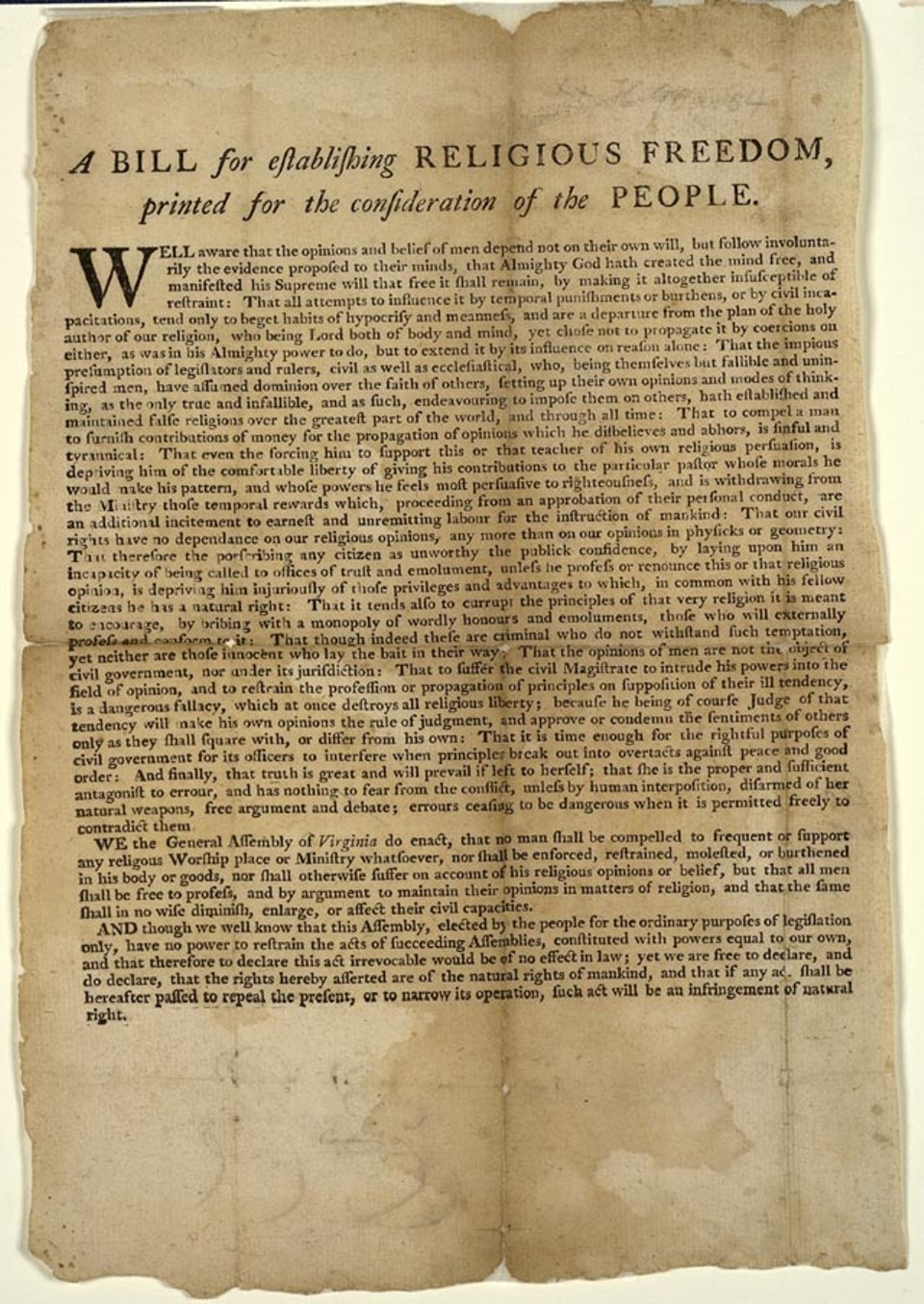
The document image is from the Library of Congress.
It has been resized for this page.
| The
image below shows the proposed law that became the Virginia Statute for
Religious Freedom. In the
law making process, a proposed law is called a bill. Statute is a
common term for a law passed by an elected legislature. It was passed by the Virginia General
Assembly in
1786, with some slight changes. Notice that the small letter "s" at that time was often printed with a shape that resembles the small letter "f," depending on its position in a word. Thomas Jefferson was the author of this Virginia law. It says that all people have a right to worship as they choose, and that there will be no "established" or official church in Virginia. It also says that there will be no religious requirement for holding public office. (See the second to last paragraph.) The Virginia Statute for Religious Freedom had a big impact on ideas about religious liberty throughout the new nation. It influenced the writing of the First Amendment, which is part of the U.S. Bill of Rights. |
|
Copyright
Notice
Copyright 2007, 2015 by David Burns. All rights reserved. |